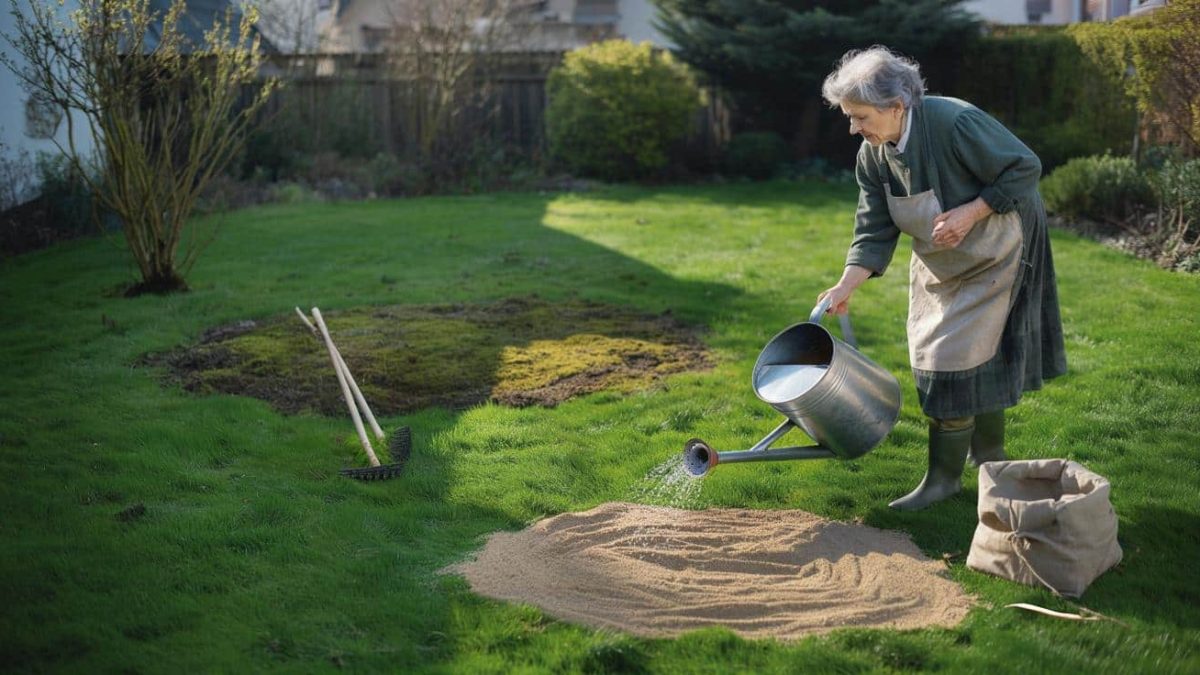
As the first spring days arrive, many homeowners find themselves in a race against time to prevent moss from taking over their lawns. However, a clever trick passed down through generations may hold the key to a lush, moss-free yard. This old-fashioned gardening method, known as the “Grandma’s Trick,” could be the solution you’ve been searching for.
The beauty of this approach is its simplicity and effectiveness. Rather than waiting until the moss has already taken hold, the trick is to get ahead of the game and nip the problem in the bud before it even starts. By following this step-by-step process, you can enjoy a vibrant, healthy lawn all season long.
Unveiling the Grandma’s Trick: The Two-Step Approach
The Grandma’s Trick is a straightforward two-step process that can be easily implemented in your own garden. The key is to act proactively in the early spring, before the moss has a chance to spread.
The first step involves applying a layer of iron(II) sulfate to the lawn. This mineral compound helps to acidify the soil, creating an environment that is less favorable for moss growth. By applying it in the early spring, you can effectively prevent moss from taking over your lawn.
- ➡Schwarzer Mars-Stein enthüllt: Uraltes Wasser steckt noch in diesem Meteoriten
- ➡Gefahr im Garten: Diese 3 Pflanzen locken ab März giftige Vipern an
- ➡Studie warnt: Wie sich steigende Meerestemperaturen auf unsere Fischbestände auswirken
- ➡10 historische Romane, die Sie wie eine Zeitreisende durchsitzen lassen
The second step is to evenly distribute a layer of sand over the treated area. This sand acts as a protective barrier, making it harder for the moss to take root and thrive. Together, the iron(II) sulfate and sand work in harmony to create a hostile environment for moss, giving your grass the upper hand.
The Unexpected Benefit: Lush and Vibrant Lawn
The Grandma’s Trick not only prevents moss from invading your lawn, but it also has the added benefit of promoting the growth and health of your grass. The iron(II) sulfate helps to strengthen the grass and encourage deeper root development, while the sand provides a stable and well-drained foundation for the lawn to flourish.
As a result, your lawn will not only be free of unsightly moss, but it will also be lush, vibrant, and resilient, ready to withstand the challenges of the growing season. This combination of prevention and nourishment can transform a dull, patchy lawn into a verdant, eye-catching oasis.
Best of all, the Grandma’s Trick is a cost-effective and eco-friendly solution, making it a practical choice for homeowners who want to maintain their lawns without relying on harsh chemicals or costly treatments.
- ➡Beka’s 4-Piece Cookware Set Heavily Discounted on Amazon, Orders Skyrocketing
- ➡Dieser Mini-Käse hilft gegen morgendliche Blutzucker-Schwankungen
- ➡Once Popular Girl’s Name from the 1950s Disappearing: Hardly Any Babies Named That Anymore
- ➡Monty Don’s March Trick: How to Make Hydrangeas Explode with Blooms
When to Apply the Grandma’s Trick
The optimal time to implement the Grandma’s Trick is in the early spring, typically between March and April. This is the critical window when moss spores are just beginning to germinate and take hold, making it the perfect time to intervene and prevent the problem before it escalates.
By acting quickly and applying the iron(II) sulfate and sand in the early spring, you can effectively disrupt the moss’s growth cycle and give your grass the upper hand. This proactive approach ensures that your lawn remains vibrant and moss-free throughout the entire growing season.
It’s important to note that the Grandma’s Trick should be repeated annually, as the effects of the treatment will wear off over time. By making this a regular part of your lawn care routine, you can maintain a healthy, moss-free lawn year after year.
What If Moss Still Persists?
While the Grandma’s Trick is highly effective in preventing moss growth, there may be instances where moss still manages to take hold, despite your efforts. This can be due to various factors, such as poor drainage, excessive shade, or compacted soil.
- ➡Diese Nachtblüher-Rakete macht deinen Garten in 60 Tagen wow
- ➡Ärztin rät: Dieses Alltags-Obst kann teure Probiotika ersetzen
- ➡Der Karotten-Trick, der jeden Gast verblüfft: Knuspriger Asia-Salat mit Chili und Sesam
- ➡Ernährungsexperte enthüllt, was wirklich in Billigwürstchen steckt – viele verlieren den Appetit
If you find that moss continues to be a problem in certain areas of your lawn, it’s important to address the underlying causes. This may involve improving soil aeration, adjusting irrigation patterns, or increasing sunlight exposure in those problem spots.
Additionally, you can consider manual removal of the moss, either by hand or with specialized tools. This can help to temporarily clear the affected areas, but it’s crucial to also address the root causes to ensure long-term success.
The Science Behind the Grandma’s Trick
The Grandma’s Trick works by leveraging the natural properties of iron(II) sulfate and sand to create an unfavorable environment for moss growth. Iron(II) sulfate, also known as ferrous sulfate, is a mineral compound that can lower the pH of the soil, making it more acidic.
Moss thrives in neutral or slightly acidic soil, so the application of iron(II) sulfate helps to create a less hospitable environment for its growth. Meanwhile, the layer of sand on top of the treated area acts as a physical barrier, making it harder for the moss spores to take root and establish themselves.
Together, these two elements work in harmony to suppress the moss and give your grass the opportunity to flourish. It’s a simple yet effective solution that has been passed down through generations, proving the wisdom and ingenuity of our grandparents’ gardening techniques.
| Early Spring | Late Spring/Early Summer |
|---|---|
| Apply iron(II) sulfate to the lawn | Monitor for any remaining moss and address underlying causes |
| Distribute a layer of sand over the treated area | Repeat the Grandma’s Trick annually for best results |
“The Grandma’s Trick is a time-tested and effective method for keeping moss at bay in the early spring. By acting proactively, homeowners can ensure a lush, healthy lawn all season long.”
– Sarah Müller, Lawn Care Specialist
Also Read
- ➡Goodbye Showers: How the New “Human Washing Machine” from Japan Works
- ➡Zwei Sternzeichen erhalten vor dem 20. März 2026 eine tiefgreifende Transformation ihres Lebens
- ➡9 Gesprächsfehler, die wirklich sozial intelligente Menschen nie machen
- ➡Weihnachtssterne nicht wegwerfen: Der eine Fehler im Frühling
Moss can be a persistent and frustrating problem for homeowners, but with the Grandma’s Trick, you have a powerful weapon in your arsenal. By embracing this old-fashioned gardening method, you can reclaim your lawn and enjoy a vibrant, moss-free oasis all spring and summer long.
Frequently Asked Questions
How often should I apply the Grandma’s Trick?
The Grandma’s Trick should be applied annually, typically in the early spring between March and April. This ensures that the protective barrier is refreshed and maintained throughout the growing season.
What if I miss the early spring window?
While the early spring is the ideal time to apply the Grandma’s Trick, it’s still possible to see benefits if you apply it later in the season. However, the earlier you can act, the more effective the method will be in preventing moss growth.
Can I use the Grandma’s Trick on other types of lawns?
Yes, the Grandma’s Trick can be used on various lawn types, including cool-season grasses like bluegrass, fescue, and ryegrass, as well as warm-season grasses like bermuda and zoysia.
How much iron(II) sulfate and sand do I need?
The amount of iron(II) sulfate and sand required will depend on the size of your lawn. As a general guideline, aim for about 4-6 pounds of iron(II) sulfate per 1,000 square feet of lawn, and a thin, even layer of sand covering the same area.
What if I still have trouble with moss?
If you find that moss continues to be a problem despite applying the Grandma’s Trick, it’s important to investigate the underlying causes, such as poor drainage, excessive shade, or compacted soil. Addressing these issues may require additional measures, such as aeration, improved irrigation, or increasing sunlight exposure.
Is the Grandma’s Trick safe for pets and children?
Yes, the Grandma’s Trick is generally considered safe for pets and children, as the iron(II) sulfate and sand are not harmful when used as directed. However, it’s always a good idea to keep children and pets off the treated area until the products have been fully absorbed into the lawn.
Can I use the Grandma’s Trick on my vegetable garden?
The Grandma’s Trick is designed specifically for lawns and is not recommended for use on vegetable gardens or other food-producing areas. The iron(II) sulfate and sand may not be suitable for those applications, and alternative methods should be used to control moss in those areas.
- ➡10 Konversationstricks: So werden Menschen sofort von Ihnen angezogen
- ➡Die größte Metropole der Welt: So leben 37 Millionen Menschen in Tokio
- ➡Nie mehr rutschige Terrasse: Wie Küchenmittel Moos dauerhaft stoppen
- ➡Toilettenpapier gestern, Wasser heute: Warum immer mehr Menschen auf Wasserspülung umsteigen
How long will the effects of the Grandma’s Trick last?
The effects of the Grandma’s Trick can last for approximately one growing season, which is why it’s important to reapply the treatment annually. Over time, the soil pH and physical barrier provided by the sand will diminish, allowing moss to potentially return if the process is not repeated.