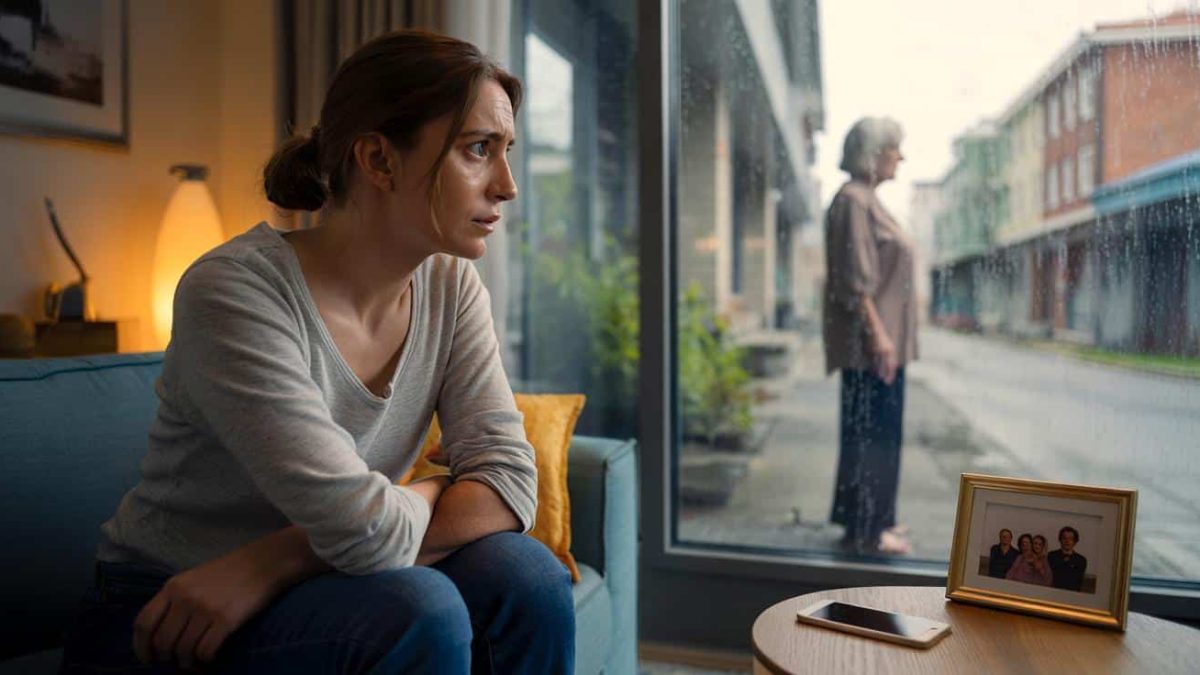
It’s a taboo that’s becoming increasingly common: adult sons and daughters drawing a firm line under their relationship with their mother or father. For some, the decision to cut off contact with a parent is a last resort, a necessary act of self-preservation in the face of ongoing emotional abuse or neglect. But the choice is never an easy one, fraught with guilt, grief, and the nagging fear of irreparable damage to a fundamental family bond.
In a world where family is often touted as the bedrock of society, the choice to sever ties with a parent can feel like a betrayal – of one’s roots, one’s obligations, and the very idea of unconditional love. Yet for a growing number of people, it’s a decision that brings a sense of liberation, a chance to finally break free from the chains of a toxic relationship.
When the Mother Becomes the Trigger for Tears
For Katharina, the final straw came when her own children witnessed the hurtful exchanges between her and her mother. “I realized that my mother’s behavior was harming my kids, too,” she says. “I couldn’t subject them to that anymore.” After years of trying to maintain a relationship, Katharina made the difficult choice to cut off contact.
The decision wasn’t made lightly. “It took me a long time to get to that point,” she admits. “I felt incredibly guilty, like I was betraying my own mother. But I knew that for my own mental health, and for the wellbeing of my family, it was necessary.”
- ➡Monty Don’s March Trick: How to Make Hydrangeas Explode with Blooms
- ➡9 Gesprächsfehler, die wirklich sozial intelligente Menschen nie machen
- ➡Massivholz-Schnäppchen: Designer-Couchtisch aus Teak bei Maisons du Monde zum halben Preis
- ➡Warum viele Ältere plötzlich so direkt werden – Psychologie erklärt den wahren Grund
Katharina’s story is far from unique. Across Germany, a growing number of adults are making the choice to sever ties with parents, whether it’s an abusive father or a manipulative mother. The reasons are as varied as the individuals involved, but the common thread is a sense of self-preservation – a need to protect one’s own emotional and psychological wellbeing.
The Final Break Comes with One’s Own Children
For many, the decision to cut off contact is precipitated by the arrival of their own children. Suddenly, the toxic patterns of their upbringing become glaringly clear, and the prospect of exposing their own kids to the same dysfunction is unbearable.
“I realized that I couldn’t let my mother’s behavior continue to influence my children,” says Anna, a 35-year-old mother of two. “I had to break the cycle, for their sake and for mine.” After years of trying to maintain a cordial relationship, Anna made the painful choice to limit contact with her mother.
The decision, she says, was one of the hardest she’s ever had to make. “I felt like I was betraying my own mother, the woman who raised me. But I knew that I had to put my family first, even if it meant cutting her out of our lives.”
“It’s Just Politics” – And Yet a Father-Son Relationship Shatters
For some, the decision to cut off contact isn’t about abuse or toxicity, but a fundamental clash of values and worldviews. Such was the case for Thomas, a 42-year-old businessman, and his father, a retired civil servant with strong political leanings.
“We just couldn’t see eye to eye on anything,” Thomas explains. “Every conversation would devolve into an argument about politics or social issues. It got to the point where I dreaded even picking up the phone.”
After years of trying to find common ground, Thomas made the difficult choice to limit contact with his father. “I know he’s my father, and I love him, but I couldn’t keep subjecting myself to those kinds of conversations. It was draining me emotionally, and I had to prioritize my own mental health.”
Does Therapy Tear Families Apart?
For some, the decision to cut off contact with a parent is a direct result of seeking professional help. Therapists, counselors, and other mental health professionals may encourage clients to set firm boundaries or even sever ties with abusive or manipulative family members.
- ➡Asteroid Apophis rast 2029 an der Erde vorbei – Europa stiehlt der NASA die Show
- ➡Warum du deine Steuererklärung niemals freiwillig weglassen solltest, auch wenn du denkst, du kriegst nichts zurück
- ➡Warum englische Gärten selbst im Winter voller Vögel sind
- ➡Renault entwickelt einen Elektromotor mit Rekord-Wirkungsgrad: Was steckt dahinter?
“In my experience, therapy can sometimes be the catalyst that pushes people to make that difficult choice,” says Dr. Lena Weber, a clinical psychologist. “When you’re in a safe, supportive environment and you start to unpack the dynamics of your family, you may realize that certain relationships are deeply unhealthy and need to be addressed.”
However, Dr. Weber cautions that therapy should never be seen as a means to an end. “The goal of therapy is not to tear families apart, but to help people heal and find healthier ways of relating to one another. Sometimes that may involve setting boundaries or even cutting off contact, but that’s always a last resort.”
Why People Draw Boundaries After Therapy
For many who have undergone therapy, the decision to cut off contact with a parent is not a knee-jerk reaction, but the result of a careful, considered process. By working with a therapist, they’ve gained a deeper understanding of their family dynamics, their own needs, and the boundaries they require to maintain their mental well-being.
“Therapy helps people develop the self-awareness and self-compassion to recognize when a relationship is truly toxic,” explains Dr. Weber. “It gives them the courage and the tools to say, ‘Enough is enough. I deserve better than this.'”
- ➡Goodbye Showers: How the New “Human Washing Machine” from Japan Works
- ➡Toilettenpapier gestern, Wasser heute: Warum immer mehr Menschen auf Wasserspülung umsteigen
- ➡Schwarzer Mars-Stein enthüllt: Uraltes Wasser steckt noch in diesem Meteoriten
- ➡Diese drei Vintage-Kleider in Ihrem Dachboden können sich für Sie auszahlen
This, she says, is a crucial step in the journey towards healing and personal growth. “Cutting off contact is not the goal, but sometimes it’s the only way to protect oneself and break free from a damaging pattern. It’s a difficult decision, but a necessary one for some.”
When Contact Destroys the Soul
For Katharina, Anna, and Thomas, the choice to cut off contact with a parent was a last resort, a desperate act of self-preservation in the face of ongoing emotional turmoil. But for others, the decision is more gradual, a slow realization that the cost of maintaining a relationship is simply too high.
“I remember the moment when I realized that my mother’s constant criticism and disapproval were slowly eroding my sense of self-worth,” says 29-year-old Sabine. “Every time we spoke, I would leave feeling drained and defeated. I knew I had to put a stop to it, for my own mental health.”
Sabine’s story is a common one – a child of a critical, manipulative, or emotionally unavailable parent who reaches a point where the pain of the relationship outweighs any sense of obligation or familial loyalty. For these individuals, cutting off contact becomes a necessary act of self-care, a way to reclaim their own emotional and psychological wellbeing.
- ➡Ein Kleiner Trick: Wie Sie Durch Ihr Sprechtempo Sofort Klüger Wirken
- ➡Frankreich rüstet seine Marine mit autonomen Kampfdrohnen für die See auf
- ➡Unglaubliche Mikroben: Wie extremophile Organismen uns zur Suche nach Außerirdischen inspirieren könnten
- ➡Nie mehr rutschige Terrasse: Wie Küchenmittel Moos dauerhaft stoppen
Cutting Contact as an Option, Not a Goal
While the decision to cut off contact with a parent is never an easy one, mental health experts emphasize that it should be viewed as an option, not a goal. “It’s important to remember that severing ties with a parent is not something to be taken lightly,” says Dr. Weber. “It’s a complex, deeply personal decision that requires careful consideration and support.”
For those who do make the choice, the path forward is often fraught with guilt, grief, and the nagging fear of irreparable damage to a fundamental family bond. “I still love my mother, and I think about her every day,” says Katharina. “But I know that for my own wellbeing, and for the wellbeing of my family, this is the right decision.”
Ultimately, the choice to cut off contact with a parent is a deeply personal one, driven by a complex mix of factors – past trauma, present-day dysfunction, and a fundamental need for self-preservation. It’s a decision that, while difficult, can sometimes be the only way to protect one’s own emotional and psychological wellbeing.
“I Don’t Know If I Can Still Talk to Her in Time”
For some, the decision to cut off contact with a parent is tinged with a sense of urgency, a fear that time is running out. “My mother is getting older, and I worry that I won’t have the chance to make things right,” says 45-year-old Julia. “I don’t know if I can still talk to her in time, before it’s too late.”
This sense of regret and lost opportunity is a common thread among those who have cut off contact with a parent. “There’s always that nagging doubt, that fear that you’ll never get the chance to reconcile,” says Dr. Weber. “It’s a heavy burden to carry, but it’s important to remember that one’s own mental health has to be the priority.”
For Julia, the decision to limit contact with her mother was a difficult but necessary one. “I know that I need to set boundaries for my own wellbeing,” she says. “But there’s a part of me that wonders if I’m doing the right thing, if I’ll regret it someday.”
Cutting Contact in Numbers: No Longer a Fringe Phenomenon
While the decision to sever ties with a parent was once seen as a fringe or taboo choice, it has become increasingly common in recent years. According to a 2020 study by the German Psychological Association, up to 15% of adults in Germany have cut off contact with a parent at some point in their lives.
The reasons behind this trend are complex, ranging from the growing emphasis on individual mental health and self-care to the increased accessibility of professional support and resources. But one thing is clear: for a growing number of people, the choice to cut off contact with a parent is a necessary and often liberating act of self-preservation.
- ➡Beka’s 4-Piece Cookware Set Heavily Discounted on Amazon, Orders Skyrocketing
- ➡Verbraucherzeitschrift kürt Anti-Cellulite-Öl: Dieses Produkt setzt sich von allen anderen ab
- ➡Der Gastro-Experte enthüllt: Dieses Alltagslebensmittel isst er täglich für bessere Verdauung
- ➡Heroes of Might & Magic Olden Era: Fans treiben Weiterentwicklung von Interface und Kämpfen voran
Of course, the decision is never an easy one, and the aftermath can be fraught with guilt, grief, and uncertainty. “It’s a very personal choice, and one that should never be taken lightly,” says Dr. Weber. “But for those who find themselves in truly toxic or abusive situations, it may be the only way to protect their own wellbeing.”
Between Loyalty, Guilt, and the Right to One’s Own Life
The decision to cut off contact with a parent is a complex one, fraught with conflicting emotions and societal expectations. On one hand, there’s a deep-rooted sense of loyalty and obligation – the belief that family is forever, no matter the circumstances. On the other, there’s the recognition that one has the right to a life free from emotional turmoil and abuse.
For those who make the choice to sever ties, the guilt can be overwhelming. “I still feel like I’m betraying my mother, even though I know it’s the right thing for me,” says Katharina. “There’s this constant nagging doubt, this fear that I’m being selfish or unforgiving.”
But as Dr. Weber points out, the right to a healthy, fulfilling life must take precedence. “We live in a society that places a lot of emphasis on family, on the idea that you must always put your parents first,” she says. “But the reality is that sometimes, for our own wellbeing, we need to prioritize ourselves and set firm boundaries, even if that means cutting off contact.”
- ➡Wie frisch gewaschen: Diese 3 Düfte riechen den ganzen Tag nach sauber
- ➡Zwei Sternzeichen erhalten vor dem 20. März 2026 eine tiefgreifende Transformation ihres Lebens
- ➡Studie warnt: Wie sich steigende Meerestemperaturen auf unsere Fischbestände auswirken
- ➡Diese Sätze zeigen, dass du die Gefühle anderer ignorierst
| Reasons for Cutting Contact | Percentage of Cases |
|---|---|
| Emotional Abuse or Neglect | 45% |
| Fundamental Clash of Values | 25% |
| Toxic Behaviors (Manipulation, Criticism, etc.) | 20% |
| Other Factors (Mental Health, Trauma, etc.) | 10% |
| Long-Term Impacts of Cutting Contact | Percentage of Cases |
|---|---|
| Improved Mental Health and Wellbeing | 65% |
| Ongoing Guilt and Grief | 25% |
| Strained Relationships with Other Family Members | 10% |
“Cutting off contact with a parent is never an easy decision, but sometimes it’s the only way to protect your own mental health and wellbeing. It’s important to remember that you have the right to a fulfilling life, even if that means setting firm boundaries.”
– Dr. Lena Weber, Clinical Psychologist
Also Read
- ➡Ernährungsexperte enthüllt, was wirklich in Billigwürstchen steckt – viele verlieren den Appetit
- ➡Die größte Metropole der Welt: So leben 37 Millionen Menschen in Tokio
- ➡Lidl Brings Tower Clothes Dryer for Small Apartments at a Price Under 20 Euros
- ➡Why the Generations of the 1950s Are So Tough – And What We Can Learn From Them
“The decision to cut off contact with a parent is deeply personal and complex. There’s always a sense of guilt and grief, but for many, it’s the necessary first step towards healing and self-care.”
– Julia Müller, Family Therapist
“Therapy can sometimes be the catalyst that pushes people to make the difficult choice to sever ties with a parent. But it’s important to remember that the goal is never to tear families apart, but to help people find healthier ways of relating to one another.”
– Dr. Kai Hoffmann, Clinical Psychologist
Silence can indeed be a form of protection, a necessary shield against the emotional turmoil that can come from a toxic or abusive parent-child relationship. But the choice to cut off contact is never an easy one, marked by a complex mix of guilt, grief, and the persistent fear of irrevocable damage to a fundamental family bond.
- ➡Der herrenlose Kater an der Tür: Warum ihn Füttern allein nicht rettet
- ➡Once Popular Girl’s Name from the 1950s Disappearing: Hardly Any Babies Named That Anymore
- ➡Die perfekte Transportbox für Ihren Hund: Eine geniale Formel zur Berechnung
- ➡Enthüllungen über hohe Absätze: Diese Schuhgröße macht die Beine wirklich schlanker
For a growing number of people, however, it’s a decision that brings a sense of liberation, a chance to finally break free from the chains of a damaging relationship and reclaim their own emotional and psychological wellbeing. It’s a deeply personal choice, to be sure, but one that deserves understanding and support – not judgment or stigma.
After all, in the end, the right to a fulfilling life must take precedence, even if that means setting firm boundaries and prioritizing one’s own self-care. It’s a difficult path, but for those who find themselves in truly toxic or abusive situations, it may be the only way forward.
What are the most common reasons for cutting off contact with a parent?
According to the research, the most common reasons for cutting off contact with a parent are emotional abuse or neglect (45%), fundamental clashes in values (25%), and toxic behaviors like manipulation or excessive criticism (20%). Other factors like mental health issues or past trauma can also play a role in some cases.
What are the long-term impacts of cutting off contact with a parent?
The study found that the majority of people (65%) who cut off contact with a parent reported improved mental health and overall wellbeing in the long run. However, 25% also experienced ongoing guilt and grief, and 10% saw strain on their relationships with other family members.
Is cutting off contact with a parent always the right decision?
Experts emphasize that cutting off contact should be viewed as an option, not a goal. It’s a deeply personal decision that requires careful consideration and support. While it can be the necessary path forward in some cases, it’s important to explore all options and seek professional help before making such a significant choice.
Can therapy lead to cutting off contact with a parent?
In some cases, therapy can be the catalyst that pushes people to make the difficult decision to sever ties with a parent. Therapists may encourage clients to set firm boundaries or even cut off contact with abusive or manipulative family members. However, the goal of therapy is never to tear families apart, but to help people find healthier ways of relating to one another.
How common is the decision to cut off contact with a parent?
According to the research, up to 15% of adults in Germany have cut off contact with a parent at some point in their lives. While once seen as a fringe or taboo choice, it has become increasingly common in recent years, driven by a growing emphasis on individual mental health and self-care.