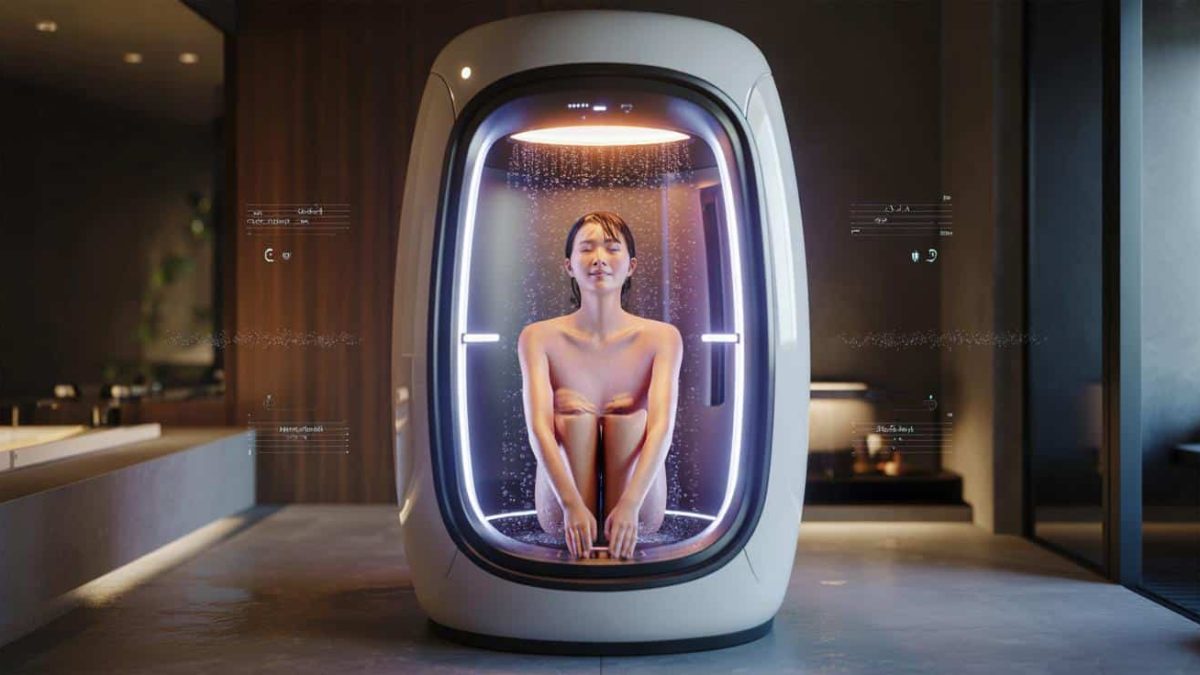
Imagine a future where the traditional shower area in modern bathrooms is replaced by a futuristic washing capsule. In Osaka, Japan, engineers are working on a groundbreaking innovation that could revolutionize the way we clean ourselves. This “human washing machine” promises to offer a more efficient, personalized, and even enjoyable bathing experience. But what exactly is this technology, and how does it work?
As we step into the age of smart homes and advanced personal care, the classic shower setup is starting to feel outdated. The new “human washing machine” aims to provide a more comprehensive and data-driven approach to our daily hygiene routines. By combining cutting-edge sensors, AI-powered controls, and a unique capsule design, this innovative system could redefine the way we think about personal cleanliness.
Inside the “Human Washing Machine” Capsule
The core of this technology is a self-contained washing capsule that replaces the traditional shower. Users simply step inside the capsule, and the machine takes care of the rest. Advanced sensors monitor every aspect of the washing process, from body temperature and skin condition to the precise application of water, soap, and even micro-bubbles.
The capsule’s AI-powered controls are programmed to customize the washing cycle based on each individual’s unique needs and preferences. This means no more guessing the right water temperature or scrubbing too hard – the machine knows exactly how to clean you effectively and comfortably.
- ➡9 Gesprächsfehler, die wirklich sozial intelligente Menschen nie machen
- ➡Ernährungsexperte enthüllt, was wirklich in Billigwürstchen steckt – viele verlieren den Appetit
- ➡Warum englische Gärten selbst im Winter voller Vögel sind
- ➡Cutting Contact with One’s Own Mother: When Silence is the Only Protection
One of the key features of the “human washing machine” is its use of micro-bubbles. These tiny, air-infused bubbles are said to provide a more thorough and gentle cleansing experience, reaching areas that traditional methods may miss. The capsule’s advanced water and soap distribution system ensures an even, efficient coverage, leaving users feeling refreshed and rejuvenated.
Replacing the Traditional Shower
The rise of the “human washing machine” comes as no surprise, given the growing demand for more personalized and high-tech solutions in the personal care and home automation sectors. The traditional shower, while reliable, can be seen as a one-size-fits-all approach that doesn’t take into account individual needs and preferences.
By offering a more tailored and data-driven bathing experience, the “human washing machine” aims to provide a range of benefits. From better hygiene and skin health to reduced water and energy consumption, this innovative technology could have a significant impact on our daily routines and the overall sustainability of our homes.
Of course, the transition from the classic shower to the “human washing machine” will not happen overnight. Consumers will need to weigh the potential advantages and costs, as well as adapt to the new way of bathing. But as smart home technologies continue to evolve, the “human washing machine” could become an increasingly attractive option for those seeking a more personalized and efficient cleaning experience.
- ➡Der neue Garnier-Beauty-Trend: Getöntes Fluid mit LSF 50 zaubert einen Filter-Teint
- ➡Uraltes Gestein aus dem All: Mars-Meteorit enthüllt verstecktes Wasserreservoir
- ➡Studie warnt: Wie sich steigende Meerestemperaturen auf unsere Fischbestände auswirken
- ➡Frankreich rüstet seine Marine mit autonomen Kampfdrohnen für die See auf
Sensors and AI: The Brains Behind the “Human Washing Machine”
The “human washing machine” is more than just a fancy capsule – it’s a sophisticated system that leverages advanced sensors and artificial intelligence to deliver a truly personalized bathing experience. From monitoring skin condition to adjusting water temperature and pressure, the machine’s AI-driven controls are designed to optimize the washing process for each individual user.
By analyzing data from a network of sensors, the “human washing machine” can detect subtle changes in body temperature, skin pH levels, and even sweat production. This information is then used to fine-tune the washing cycle, ensuring that the right amount of water, soap, and even micro-bubbles are applied for maximum cleanliness and skin health.
But the technology doesn’t stop there. The “human washing machine” also incorporates voice controls and facial recognition, allowing users to customize their preferences and even save personal settings for future use. This level of personalization and automation sets the “human washing machine” apart from traditional shower systems, offering a truly bespoke bathing experience.
The Future of Personal Hygiene: Embracing the “Human Washing Machine”
As the “human washing machine” continues to evolve, it’s easy to see how this technology could become a game-changer in the world of personal hygiene. From improved cleanliness and skin health to potential water and energy savings, the benefits of this innovative system are hard to ignore.
- ➡Günstig tanken im März: Der einfache, effektive und legale Trick
- ➡Vermeiden Sie teure Heizfehler im Frühling: Der richtige Umgang mit der Heizung lohnt sich
- ➡Dieses erschwingliche Lidl-Brot macht Ihr Frühstück deutlich gesünder
- ➡Warum du deine Steuererklärung niemals freiwillig weglassen solltest, auch wenn du denkst, du kriegst nichts zurück
Of course, the “human washing machine” isn’t just for the tech-savvy or the wealthy. As the technology matures and becomes more affordable, it could become a practical option for a wide range of consumers, from busy professionals to the elderly or those with limited mobility.
As we look to the future, the “human washing machine” could even pave the way for further advancements in home automation and personal care. Imagine a future where our bathrooms are fully integrated with smart home systems, allowing for seamless control and optimization of our daily hygiene routines. The possibilities are endless, and the “human washing machine” is just the beginning.
Practical Considerations for the “Human Washing Machine”
While the “human washing machine” presents an exciting vision of the future, there are practical considerations that consumers and manufacturers will need to address. Issues such as installation, maintenance, and energy consumption will all play a role in the widespread adoption of this technology.
Additionally, concerns around data privacy and security will need to be carefully considered, as the “human washing machine” collects and processes a significant amount of personal information. Ensuring that this data is securely stored and used responsibly will be crucial in building consumer trust.
- ➡Die unterschätzte Macht der mentalen Stärke: Wie Nichtwissen Ihre größte Chance sein kann
- ➡Dieses feuerfarbige Wunderpflanze ist der Hingucker jeder Einfahrt
- ➡Der Gartenhaus-Trick: So umgehen Sie legal die Steuerfalle im eigenen Garten
- ➡Der Karotten-Trick, der jeden Gast verblüfft: Knuspriger Asia-Salat mit Chili und Sesam
Despite these challenges, the potential benefits of the “human washing machine” are hard to ignore. As we continue to seek out more efficient and personalized solutions for our daily routines, this innovative technology could become a valuable asset in our homes and beyond.
Expert Insights on the “Human Washing Machine”
“The ‘human washing machine’ represents a significant step forward in the evolution of personal hygiene. By leveraging advanced sensors and AI, this technology has the potential to provide a truly customized and efficient bathing experience that goes far beyond the traditional shower.”
– Dr. Akiko Tanaka, Professor of Biomedical Engineering, Osaka University
“One of the key advantages of the ‘human washing machine’ is its ability to promote better skin health. The use of micro-bubbles and personalized cleansing routines can help to maintain the skin’s natural pH balance and reduce the risk of irritation or dryness.”
Also Read– Dr. Hiroshi Nakamura, Dermatologist and Skincare Specialist
“As we move towards a more sustainable future, the ‘human washing machine’ could play a significant role in reducing water and energy consumption in our homes. By optimizing the bathing process, this technology has the potential to make a meaningful impact on our environmental footprint.”
– Sarah Nakamura, Environmental Policy Analyst
The future of personal hygiene is undoubtedly exciting, and the “human washing machine” is just the beginning. As we embrace new technologies and rethink our daily routines, the possibilities for even more innovative and personalized solutions are endless. While the transition may take time, the “human washing machine” is a promising step towards a cleaner, more efficient, and more enjoyable bathing experience.
- ➡Gefahr im Garten: Diese 3 Pflanzen locken ab März giftige Vipern an
- ➡Why the Generations of the 1950s Are So Tough – And What We Can Learn From Them
- ➡Verbraucherzeitschrift kürt Anti-Cellulite-Öl: Dieses Produkt setzt sich von allen anderen ab
- ➡Monty Don’s March Trick: How to Make Hydrangeas Explode with Blooms
FAQ
What is the “human washing machine” and how does it work?
The “human washing machine” is a futuristic bathing capsule that replaces the traditional shower. It uses advanced sensors, AI-powered controls, and specialized features like micro-bubbles to provide a highly personalized and efficient cleaning experience.
What are the key features of the “human washing machine”?
Key features include customized washing cycles, advanced sensors for monitoring skin and body data, voice controls, facial recognition, and the use of micro-bubbles for a more thorough and gentle cleansing.
Who is the “human washing machine” designed for?
The “human washing machine” is designed for a wide range of consumers, from busy professionals to the elderly or those with limited mobility. It aims to provide a more personalized and efficient bathing experience for everyone.
How does the “human washing machine” compare to a traditional shower?
The “human washing machine” offers a more advanced, data-driven, and personalized bathing experience compared to a traditional shower. It can provide better hygiene, skin health, and even potential water and energy savings.
- ➡Beka’s 4-Piece Cookware Set Heavily Discounted on Amazon, Orders Skyrocketing
- ➡Zwei Sternzeichen erhalten vor dem 20. März 2026 eine tiefgreifende Transformation ihres Lebens
- ➡Lidl Brings Tower Clothes Dryer for Small Apartments at a Price Under 20 Euros
- ➡Weihnachtssterne nicht wegwerfen: Der eine Fehler im Frühling
What are the potential downsides or challenges of the “human washing machine”?
Potential challenges include installation and maintenance costs, concerns around data privacy and security, and the need for consumer adaptation to the new technology. Ensuring affordability and addressing these practical considerations will be important for widespread adoption.
How realistic is it for the “human washing machine” to be installed in a home bathroom?
While the “human washing machine” may initially be more practical for commercial or specialized settings, advancements in technology and design could make it a viable option for home bathrooms in the future. As smart home technology continues to evolve, the integration of the “human washing machine” into residential spaces becomes increasingly feasible.
What are some of the key terms or concepts associated with the “human washing machine”?
Key terms include micro-bubbles, AI-powered controls, smart sensors, personalized bathing, home automation, and sustainable personal hygiene solutions.
How will the “human washing machine” impact the future of personal hygiene and home design?
The “human washing machine” has the potential to redefine the way we approach personal hygiene and home design. It could lead to more efficient, personalized, and technologically advanced bathroom spaces that prioritize user comfort, skin health, and environmental sustainability.
- ➡Die perfekte Transportbox für Ihren Hund: Eine geniale Formel zur Berechnung
- ➡Ein Kleiner Trick: Wie Sie Durch Ihr Sprechtempo Sofort Klüger Wirken
- ➡Unglaubliche Mikroben: Wie extremophile Organismen uns zur Suche nach Außerirdischen inspirieren könnten
- ➡Die größte Metropole der Welt: So leben 37 Millionen Menschen in Tokio